Projects
Silo of Sociedade Açoreana de Sabões
Azores
Rehabilitation of the Reinforced Concrete Structure of the Raw Material Silo
2000
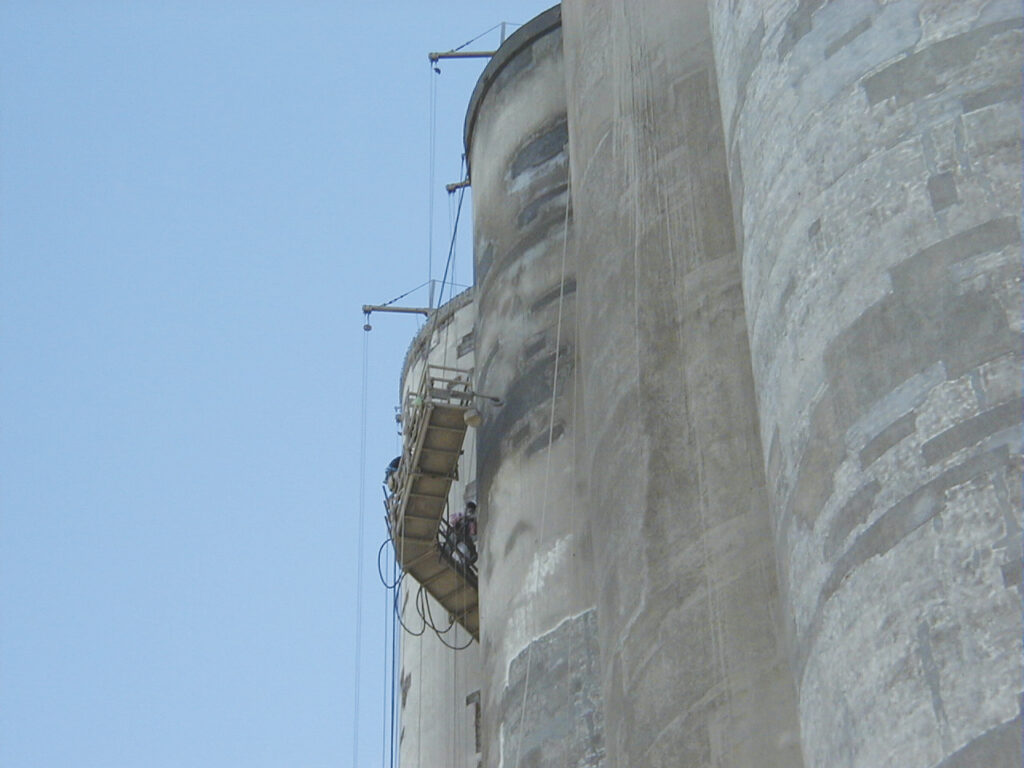
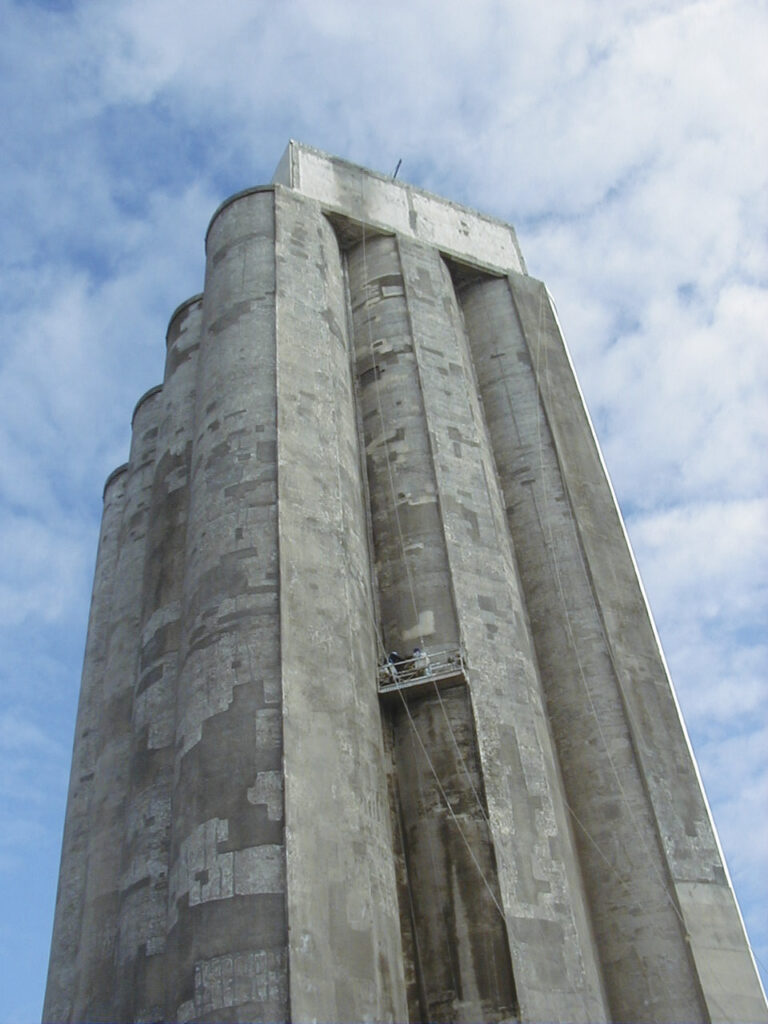
The silo, with a reinforced concrete structure completed in 1980 using the slipform method, consists of an equipment tower 62 meters high and a battery of 12 cylindrical cells, each with a diameter of 6.5 meters and a height of 50 meters. The structure, originally exposed concrete with a total exterior surface area of 6,000 m2, is located approximately 50 meters from the sea and is subject to constant exposure to salt-laden mist in a humid, sometimes hot climate with strong winds.
Rehabilitating reinforced concrete structures with a focus on durability raises several initial questions regarding the performance of the adopted solutions. In the specific case of “patch work,” it is essential to consider the effects on both unrepaired areas and the interfaces between repaired and original concrete. For the structural rehabilitation of the silo in the Azores, a multi-faceted strategy was adopted to minimize the negative effects of localized repairs and to enhance long-term durability.
Steps and techniques used
The project began with an exhaustive diagnostic phase, and a corrosion monitoring system was installed to evaluate the effectiveness of the solution over time.
The deterioration model for the silo was established based on this study. Corrosion of the reinforcement was caused by the combined effects of depassivation due to carbonation and a high concentration of chlorides in the exterior concrete cover. On the interior face of the cells, the chloride content and humidity levels were low, making the corrosion risk significantly lower.
The rehabilitation intervention was carried out mainly in 1999 and included the following:
- Repair of corroded areas (covering 30% of the total surface), by removing an average of 8 cm of the exterior concrete and replacing it with structural microconcrete applied by dry-mix shotcrete.
- Application of migrating corrosion inhibitors and a complete coating of the structure with acrylic paint resistant to chloride penetration and carbon dioxide diffusion.
Results
The results of the multi-strategy durability approach adopted in the silo’s rehabilitation are being monitored following the intervention. The corrosion monitoring system includes sensors embedded in both the repaired and original concrete zones, with automatic data acquisition.
Data collected by the system has shown:
• High electrical resistivity in the repair concrete, which inhibits the progression of corrosion and the ingress of aggressive agents;
• Very low galvanic current values in the areas with concrete replacement, indicating no ongoing corrosion (evidence of re-passivation of reinforcement);
• Decreased galvanic current values in unrepaired zones, which may suggest a reduction in corrosion rate (due to the protective effect of the paint and corrosion inhibitors).
TECHNICAL DATA
LOCATION: Lagoa – São Miguel / Azores
CLIENT: Sociedade Açoreana de Sabões, S.A.
OWNER: Sociedade Açoreana de Sabões, S.A.
PATOLOGY STUDY: Oz, Ld.ª
DRAFT REHABILITATION: Grid, Ld.ª
SUPERVISION: Mota Amaral Eng.
WORK DIRECTOR: Eng. José Paulo Costa
BUDGET: € 920 047,69
EXECUTION TIME: 15 months
Applied Technique